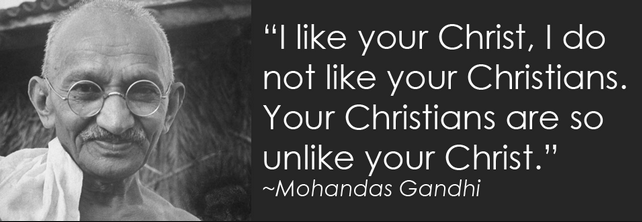
It is that time of year. 4th of July week and weekend. Flags come out from the woodworks and get placed everywhere, including all over churches. I want to know one thing:

It is that time of year. 4th of July week and weekend. Flags come out from the woodworks and get placed everywhere, including all over churches. I want to know one thing:
One of the top news stories of the past couple days has been Dobson’s attack on Barack Obama’s speech from 2 years ago. This whole thing has intriguiged me for 2 reasons:
The news is that Dobson has accused Obama of dragging his confused theology into the political forefront. He also said that is he “dragging biblical understanding through the gutter.” Harsh words to say the least. In the speech, Obama was discussing how both liberal and conservative Christians can be a part of the political process without trying to mandate things illegal that they view as sin. The topic was and always will be a poignant one and I think Obama made a lot of great points.
Some great sources:
- “The clear purpose of the show was to attack Barack Obama. On the show, Dobson says of himself, ‘I’m not a reverend. I’m not a minister. I’m not a theologian. I’m not an evangelist. I’m a psychologist. I have a Ph.D. in child development.’”
- Wallis said, “I have decided to respond to Dobson’s attacks. In most every case they are themselves clear distortions of what Obama said in that speech.”
- “Dobson and his companion commentator routinely distorted what Obama was saying by rephrasing and capturing what he said in their own context and for their own agendas.”
- “What they miss here is that Obama is talking about how to live in a pluralistic society.”
My thoughts:
I’d love to hear your thoughts, especially those who agree with what Dobson said.
I’m in the news. Well kind of. A few weeks ago I spoke with a Seattle Times reporter who had read some of my blog. She wanted to talk to me about young Christians who are no longer voting Republican, and more about how faith and politics intersect. Her and I talked for around 40 minutes on the phone.
I got a text from a friend of mine this morning saying that he just saw my name in the Seattle Times. Sure enough, the article was on the front page of the Seattle Times and the main page of SeattleTimes.com. Pretty sweet. I was curious to see what she would put in the article from our conversation. Ben Climer, who went to my high school a few years after me, was also featured in the article. The article has been the most read on the Seattle Times website today, and has been showcased on a few political websites and blogs.
So what did I say? Well the article ends with this quote from me. “I just keep thinking, if Jesus were alive now, he wouldn’t necessarily be voting Republican.”
Before you read the rest of my post, go check out the article here. I’ll include the full text at the bottom of this post.
Now that you have read it…let me clear some things up.
So what do you think?
Young, evangelical … for Obama?
By Haley Edwards
Michael Dudley is the son of a preacher man. He’s a born-again Christian with two family members in the military. He grew up in the Bible Belt, where almost everyone he knew was Republican. But this fall, he’s breaking a handful of stereotypes: He plans to vote for Democrat Barack Obama. “I think a lot of Christians are having trouble getting behind everything the Republicans stand for,” said Dudley, 20, a sophomore at Seattle Pacific University. Dudley’s disenchantment with the GOP isn’t unique among young, devoutly Christian voters. According to a September 2007 survey by the Pew Forum on Religion & Public Life, 15 percent of white evangelicals between 18 and 29, a group traditionally a shoo-in for the GOP, say they no longer identify with the Republican Party. Older evangelicals are also questioning their traditional allegiance, but not at the same rate.
But, Howard Dean, don’t count your chickens quite yet. College-age and 20-something Christians may be leaving the GOP, but only 5 percent of young evangelicals have joined the Democrats, according to the Pew survey. The other 10 percent are wandering the political wilderness, somewhere between “independent” and “unaffiliated.” Shane Claiborne, a Philadelphia Christian activist and author of “Jesus for President: Politics for Ordinary Radicals,” has a different name for these folks: “political misfits.” Claiborne has traveled around the country the past several years, speaking and preaching mostly to college-age Christians who are “both socially conservative and globally aware.” That makes them disenchanted with both major parties, he said. “It’s not about liberal or conservative, or Democrats or Republicans,” he said. “I don’t think it’s a new evangelical left. … There’s a new evangelical stuck-in-the-middle.”
UW communications professor David Domke said some young evangelicals are breaking with the GOP for the same reasons many people broke from the party in the 2006 legislative elections — the unpopular war in Iraq; the Bush administration’s abysmal approval ratings; or, now, because of the tanking economy. Others broke from the party when John McCain, who hasn’t held much appeal for evangelicals in the past, became the presumptive nominee. The Arizona senator hasn’t been a consistent foe of gay marriage, and he supports federally funded embryonic stem-cell research. James Dobson, head of the conservative Christian group Focus on the Family, announced in February that if McCain was the GOP nominee, he’d sit out the election. But students at a recent bipartisan political union meeting at SPU say there’s something more going on with young Christians than disenchantment with McCain. In an informal poll of the political union, the majority supported Obama.
“I think it’s a new movement starting,” said Amy Archibald, 19, a sophomore at the evangelical school. “Most of us would never blindly follow the old Christian Right anymore. James Dobson has nothing to do with us. A lot of us are taking apart the issues, and thinking, ‘OK, well, [none of the candidates] fits what I’m looking for exactly.’ But if you’re going to vote, you’ve got to take your pros with your cons.” Eugene Cho, a founder and lead pastor at Seattle’s Quest Church, which caters to a predominantly under-35 crowd, urges young Christians to look beyond the two or three issues that have allowed Christians to be “manipulated by those that know the game or use it as their sole agenda.” “While the issue of abortion — the sanctity of life — must always be a hugely important issue, we must juxtapose that with other issues that are also very important,” Cho wrote in his blog on faith and politics.
Polls have shown that young Christians aren’t any less concerned about the “family values” issues that have traditionally driven Christians to the Republican camp. (In fact, a study by the Barna Group, an evangelical polling organization, shows young Christians are actually more conservative on abortion than their elders.) It’s just that they’re also concerned about issues such as social justice and immigration, issues traditionally associated with Democrats. Judy Naegeli, 25, who works at a Christian philanthropy, says easy access to information about the world via social-networking sites, YouTube and blogs is the reason her generation is more concerned with social justice. “It’s changed our perspective. … Each generation chooses their cause, and ours is AIDs in Africa, or poverty or social justice,” she said.
Tyler Braun, 23, a Portland seminary student who opposes abortion and gay rights, said he’ll probably vote for Obama because he would like to see U.S. troops leave Iraq. Anika Smith, 23, who works for a think tank in Seattle, said she’s concerned with the same issues, but she plans to vote for McCain: “I’m worried about the war and the economy and social-justice issues. But, the abortion issue is still nonnegotiable.” Nathan Johnson, the executive director of the King County Republican Party, says he is skeptical that young, socially conservative Christians will desert the GOP this fall. He agrees young Christians appear to be looking beyond the two or three issues — abortion, gay rights, stem-cell research — that have made Christian voters loyal in the past. “But that doesn’t mean they’re no longer Republican. “Once the primary is over, and we get into a head-to-head contest, Obama’s voting record will come to light,” said Johnson, 24. “Then there will be a lot of young conservative voters who won’t be able to tolerate what he’s stood for in terms of abortion and other socially conservative values.”
Young evangelicals are more of a swing constituency than they’ve been for decades, said Andy Crouch, an editor at Christianity Today, a national evangelical magazine. “This could turn out to be the election where both parties realize that the evangelical vote is so hopelessly split down the middle that it’s not worth courting them at all because what parties need are blocs that can be appealed to en masse,” Crouch said. “Paradoxically, evangelicals would become less relevant than ever before.”
Braun, the seminary student, said he’s not totally committed to any candidate yet. “I just keep thinking, if Jesus were alive now, he wouldn’t necessarily be voting Republican,” he said.
Part One, Two, Three, and Four.
Who Stole My Church? by Gordon MacDonald
This will be my last post on this book and also my post for Creative Chaos. If you are totally confused with what I wrote here, head back to post one, it has a lot of the book’s background info.
I want to end with a part of the book that allowed the discovery group to see that changing can make a difference in reaching younger people. Ben is the nephew of one of the ladies in the discovery group. He is 28, divorced and jobless and just started going to the church.
All of you are expecting that Ben kept coming back to the church because he liked the style…you would be wrong. While Ben did like the way church was “done” on Sundays, he didn’t keep going because of the style of music or because the pastor dressed in “normal” clothes (I will say that it was important that everything about the church was different than his childhood. If it would have been the same he would have even been more closed off). He kept going because he made relationships. A few of the men in the discovery group reached out to Ben and began to invest in him. It was these relationships that not only turned Ben’s life around but also helped him establish roots at the church. I think Ben is a great example for us to see what is important for churches to focus on.
In light of the story of Ben and the earlier posts, here are some things I take away from the book:
Thoughts?
Tonight a big crew of us from Sunset went and saw a showing of the documentary/movie Lord Save Us From Your Followers at Southlake Foursquare.
This is the first movie or well produced documentary of this type that I have seen within this topic. I do think this has the chance to become something really really big and has the chance of making a huge difference. BUT, they don’t have a huge distribution agent or lots of money, so it is going to take people like YOU to push it. I have seen the power that many blogs can have, even blogs that don’t get thousands of hits a day. So let’s make something happen.
It was cool to hear the director and producer talk together and answer questions tonight after the showing. They don’t have a huge contract and I think they see the church as one ready to be challenged, and they see how accepting many people have been towards what they are trying to do. The root of the message in the whole thing is trying to change the perception of what most people think about when they think of a Christian. Here is some of the website’s synopsis of the movie:
Though nine out of ten Americans claim a belief in God, public expression of faith is more contentious as ever. Even as discussion of religion floods the media like never before, the rhetoric is divisive and hyper as the 2008 elections loom on the horizon.
In the tradition of “entertaining documentaries” like Super Size Me, Bowling For Columbine and What the Bleep Do We Know?, Lord, Save Us From Your Followers, employs the language of pop culture to create a provocative, funny and redemptive viewing experience that will leave the audience talking for hours.
With exclusive interviews with comedian/Senatorial candidate Al Franken, former Senator and Religious Right inside man Rick Santorum, noted “liberal evangelical” Tony Campolo, conservative radio host Michael Reagan, racial reconciliation activist Dr. John Perkins and features with Bono, Pastor Rick Warren (“Purpose Driven Life”), James Dobson, Jerry Falwell and Pat Robertson, no stone is left unturned in this engaging, unpredictable and challenging look at the conflict over religion in America.
So what can you do?
They did a private showing at Lewis and Clark College last year. Lewis and Clark is a private liberal arts college in Portland. The producer said that only 12 out of 300 people who attended said they were Christians. Here is the reaction of the students who went.
Here is a 10 minute sampler of various parts of the movie and a good look into what it is all about.
To read more of my stuff, head here.
Krista Tippett has moderated an event with Chuck Colson, Greg Boyd, and Shane Claiborne. It took place during the National Pastors Convention in February. All are key leaders for each of their generations. If you want to check out some info on each person head here. Audio for the event is also there. A video of it can be found here. It is about an hour long. Thanks to Debbie for pointing this out to me.
Essentially the discussion is about how/if Christians should be involved in politics.
It was only 30 years ago that almost every Christian stayed out of politics and we have seen in the last 30 years a total switch from that mindset. This change was something helped by Colson’s book Born Again. Boyd was a pastor who refused to support conservative politics from the pulpit. Shane is a leading voice for today’s postmodern generation.
Some of my thoughts on their discussion:
Here is another blog on the same topic by Jonathan Brink.
I’ve been studying ecclesiology (”the nature of Christ’s church”) in theology class the past few weeks. We were looking at The Great Commission and talking about some distinctions that often go over-looked.
The disciples are told to do one thing, with three things that encompass the one thing. Matthew 28:19-20:
Therefore go and make disciples of all nations, baptizing them in the name of the Father and of the Son and of the Holy Spirit, and teaching them to obey everything I have commanded you.
We are to make disciples by going, baptizing and teaching.
My prof made the distinction that everything a church should be about is within this one verse, with the goal of making disciples. Often we over-emphasize the 3 actions instead of the 1 command.
I think there is a role for big evangelistic events but too often we view these as the end all of “saving souls.” If the evangelism doesn’t lead to baptism and teaching then it is pointless in itself, because it will not make disciples on its own.
This is the last in a series of three different distinctives that separate how postmoderns view faith and church from their predecessors.
3. Freedom from Foundationalism
Definition of foundationalism- the theory that at the bottom of all human knowledge is a set of internally justified beliefs. This foundation does not require external justification.
Basic Meaning- the idea that one way of thinking is correct and all others are not.
I first heard of this word and theory from Tony Jones in his new book The New Christians. You can pick up chapter 1 for free here. Both sides of the political scheme in America hold to foundational beliefs that make up the core differences between the parties. It is these differences that are not negotiable with either side. You see this within fundamental Christianity. There are certain things that are not negotiable as far as what is acceptable and unacceptable.
Postmoderns do not like this frame of mind. While they can easily hold to strong beliefs, they do not make these beliefs non negotiable or view them as perfect. I mean this in a broader way than just spiritual faith.
Benefits:
Negatives:
So what do you think of these 3? Am I right or wrong?
I read two things today that really got my attention. One has to do with Tony Jones, someone I have talked a little bit about before. The other has to do with Barack Obama.
So now you can be critical of these things too or you can be critical of me for disagreeing with them.
The talk today on so many blogs has been about this new survey that came out today saying that more people than ever are leaving their faith from childhood. Beyond this, Protestant Christianity is barely the #1 religion of choice right now. Another survey out of UCLA says that college students are more likely to be spiritual, but less religious (meaning attending church). All of these seem pretty obvious to me. However, I don’t have a 1-2-3 for fixing this, and I don’t think that it will ever be that easy. Peruse for a bit, let me know what you think.
You can check out an article by Time Magazine here, and an LA Times article here. This is the organization that put together the survey. They have some videos on how this all came together. Time was pretty pessimistic, while the LA Times had a somewhat positive tone.
Check out some other blogs with some thoughts on this. Here and here. It sure is interesting how people with different beliefs take information like this.
Recent Comments